If you're shopping lift kits and truck accessories in Reading, start by deciding whether you need a leveling upgrade or a full suspension lift. A leveling upgrade corrects factory rake and keeps daily manners intact, while a suspension lift adds clearance, wheel travel, and larger tire fitment. You'll want exact year, trim, drivetrain, and suspension details to verify Rough Country fitment. Budget for tires, alignment, and add-ons like steps, lights, or liners—you'll see how the right setup comes together.
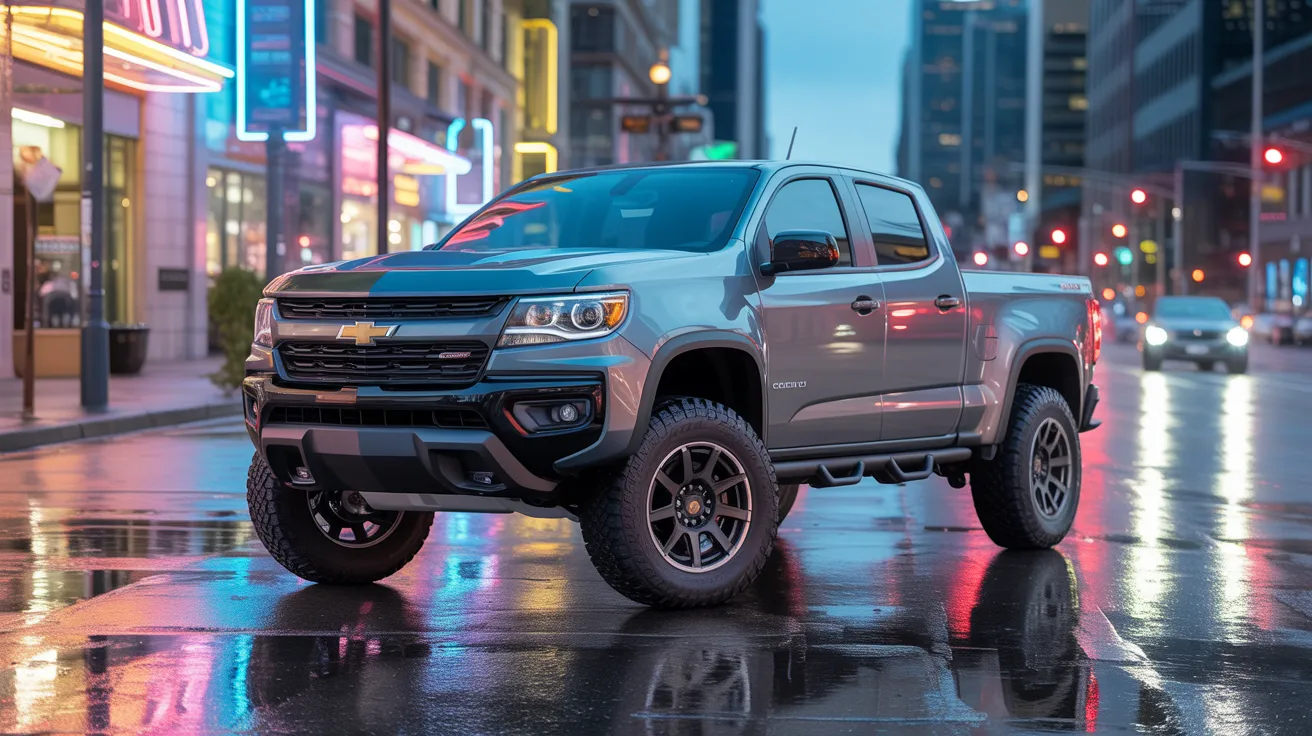
Important Highlights
- Select a leveling solution to remove factory rake while maintaining near-stock handling and fitting bigger tires for daily commuting.
- Select a suspension lift to achieve more clearance, suspension movement, and off-road capability, understanding that handling and steering may adjust.
- Confirm exact fitment by checking your truck's year, model, make, drivetrain, trim, cab, bed, and suspension setup prior to ordering Rough Country parts.
- Select lift height and shock type based on your application, such as commuting, mixed trail driving, towing, or heavier off-road travel.
- Plan your budget for beyond the kit cost, including alignment, labor, wheels, tires, shocks, and supporting accessories like steps, lights, and liners.
Suspension Lift Kits vs Leveling Kits
Even though both upgrades modify your truck's look, suspension lift kits and leveling kits solve different problems and deliver unique results. A leveling system tends to raise the front to match the rear, correcting factory rake with minimal change to geometry, ride height, and daily drivability. You use one when you seek a cleaner look and room for bigger tires.
A suspension lift raises the entire truck and modifies critical parts to create increased clearance and suspension movement. You'll see larger improvements in ride height, off-road capability, and tire fitment, though you should anticipate handling shifts, steering modifications, and a raised center of gravity. When you desire subtle visual changes, level it. When you require real clearance and articulation, lift it and organize the supporting mods tailored to your use case.
What Rough Country lift kit is right for your truck?
To narrow it down, start with your truck's year, brand, and model, drivetrain, and expected usage, because Rough Country builds lift kits around specific geometric requirements and performance targets. That baseline tells you which mounting brackets and suspension parts will actually install properly without clearance or geometry issues.
Subsequently, check OEM ride height, cab layout and bed configuration, axle specification, and if your truck runs 2WD, 4WD, or adaptive suspension. Rough Country fitment guides streamline this process, yet you should confirm fitment accuracy versus configuration-specific parts and factory package differences. A kit that fits a Silverado 1500 might not work with a Trail Boss, and a Ram running air-spring suspension needs different accommodations rather than a truck with coil springs. By confirming compatibility first, you sidestep install surprises, component conflicts, and reshipment delays.
Find the Rough Country lift kit that works with your driving preferences.
Select the kit to how you actually drive, and you'll achieve improved ride comfort, reliability, and additional tire clearance without paying for unused capability. If your truck spends most days commuting, choose a simple Rough Country leveling kit or a 2- to 3.5-inch suspension setup calibrated for daily comfort and stable steering response.
If your truck sees both pavement and trail time, move up to a suspension system that includes improved shocks and adjusted control arm geometry. You'll gain improved trail handling, improved articulation, and capacity for bigger tires without taxing original components. For heavy trail driving, emphasize raised struts, Rough Country N3 or Vertex dampers, and kits that maintain driveline angles under compression. The right Rough Country package must match cargo load, speed, and terrain, and your tolerance for ride stiffness.
Leading Rough Country Truck Accessories
Enhance your lifted truck including Rough Country upgrades that tackle the real weak points you'll see once you lift it and add bigger tires. Focus on upgraded entry steps or skid plates, which regain vehicle access and offer lower-vehicle protection once your truck sits higher and wider.
focus
What's the Right Budget for Your Build?
Once you've selected the lift kit and supporting accessories, establish a budget that exceeds the headline kit price. You'll require funds for shock absorbers, rims, tires, alignment services, labor, and any drivetrain or steering adjustments your platform needs. Brand reputation is important here; top-tier kits typically provide tighter tolerances, superior ride comfort, and fewer install headaches.
For accurate cost estimates, expect budget-friendly spacer or leveling kits to start lower, while complete suspension setups featuring control arms, tuned shocks, and oversized tires climb quickly. Install difficulty, shop rates, and calibration work can add substantially. You should also price supporting upgrades like gear changes, brake components, and recovery gear if you're building for trail use. If budget is a concern, evaluate payment plans carefully and prioritize reliability over flashy add-ons.
Common Questions Answered
How Do Lift Kits Influence Warranty Coverage?
Yes, suspension kits can affect your original warranty, however they don't automatically void it. You face warranty implications should the manufacturer proves the lift kit brought about or was part of a defect. Engine, steering, suspension, and drivetrain problems often trigger dealer conflicts. You should keep install paperwork, use premium parts, and maintain service schedules. That helps you refute denied warranties and protect coverage where the modification isn't at fault.
Does Going Bigger Require Gear Changes?
Yes—if you move up several tire sizes, you'll usually require re-gearing. As an example, if you switch from 31-inch to 35-inch tires, your truck can feel slow, hunt for gears, and build drivetrain stress under load. Re-gearing restores proper gear ratios, allowing you to recover acceleration, towing performance, and transmission behavior. You might not need it for a small tire upgrade, but if power, fuel economy, or shift quality drop, it's usually the right call.
How Frequently Should You Inspect Lift Parts?
You must check lift kit components after the first 500 miles, later at every oil change or 3,000 to 5,000 miles, according to use. Regular reviews help you detect bushing deterioration, shock seepage, bracket harm, and alignment mishaps early. Check Fastener torque after difficult terrain, towing episodes, or impacts. When you drive through mud, salt-laden, or rough terrain regularly, decrease intervals and inspect steering and suspension parts more frequently.
Will a lift kit change towing or payload capacity?
Yes, a lift kit can alter your towing and payload capacity. When you elevate ground clearance for more ground clearance, you transform suspension angles, gravitational center, and leverage on components. That can decrease stability under load and increase drivetrain stress, especially with larger tires. You should follow your OEM ratings unless an engineered kit specifically documents revised capacities. Good alignment, gearing options, and brake effectiveness matter too.
Should Alignment Services be done after installing truck modifications?
Yes—if accessories alter ride elevation, suspension geometry, steering geometry, or tire size, you should get an alignment service. You'll feel the theory fast: small modifications can pull your truck off-center, damage tread rapidly, and compromise handling. A full alignment restores camber, caster, and toe to standard. After particular upgrades, you may also need brake calibration for driver-assist accuracy. You protect tire life, steering sharpness, and real-world safety by performing alignment checks promptly.
Wrap-Up
Determining the right lift configuration and visit this page products comes down to how you use your truck, what stance you want, and what your budget can handle. When you match a Rough Country lift kit within your driving approach, you'll get performance, clearance, and looks that work together like a well-tuned drivetrain. Add wise upgrades, structure your spending carefully, and you'll build a rig remaining suitable for highways, capable off it, and equipped for anything next.